
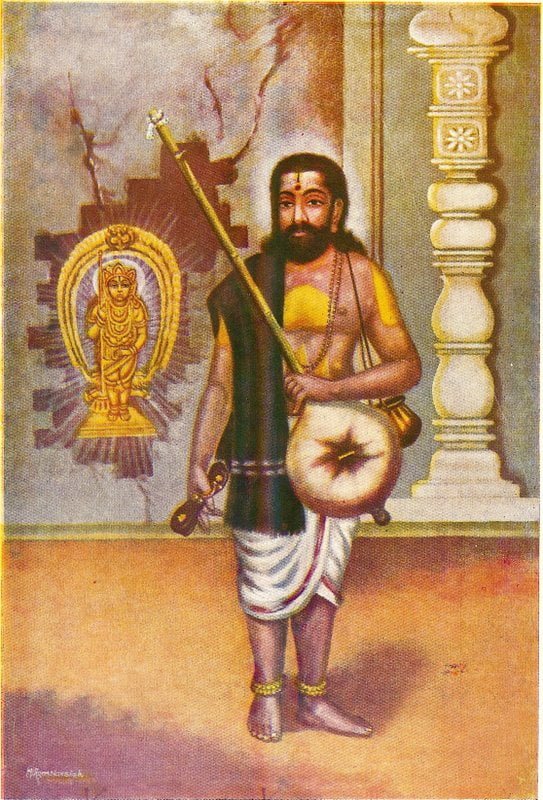
Sri Kanaka Dasaru (1509 – 1609)
Mudrika (Signature): Kagineleyaadi Keshava
Guru: Sri Vyasaraja Tirtha Mahaprabhu
Famous Works: Nalacharitre, Haribhaktisara, Ramadhanyacharitre, Mohanatarangini, and over a thousand Dasa Padagalu
Birthplace: Kaginele, near Lord Adikeshava Temple, Haveri District, Karnataka
Parents: Sri Biregowda & Smt. Beechamma
Contemporary: Sri Purandara Dasaru
Sri Kanaka Dasaru was one of the most revered Haridasas of the Dvaita tradition. Though born a shepherd, he became a profound scholar of both Shaiva and Vaishnava philosophies. After receiving jnana upadesha from Sri Vyasaraja Tirtha, he demonstrated that caste is never a barrier to divine knowledge — only the grace of Hari–Vayu leads one toward moksha.
Originally a Shaivite, he later embraced Vaishnavism and the Madhva philosophy, realizing its depth through his guru. His compositions reflect deep devotion, humility, and understanding of Taratamya tattva (the hierarchy of divinities). Sri Purandara Dasaru and Sri Kanaka Dasaru held mutual respect for each other’s wisdom and musical contributions to Hari bhakti.
Pearls of Sri Kanaka Dasa Mahaprabhu – 2
In our previous post, we began our special series celebrating the divine compositions of Sri Kanaka Dasaru with his joyous invitation to the Lord, “Bāro Krishnayya”. Today, we look at one of his most philosophically profound and socially revolutionary Dasa Padagalu (devotional songs) — “Kula Kulavendu Hodedaadadiri”.
Sri Kanaka Dasaru, a legendary saint-composer of the Haridasa movement and a prime disciple of Sri Vyasaraja Tirtha Mahaprabhu, frequently used his music to challenge rigid social structures. Having personally faced exclusion due to his birth outside the Brahmin community, Kanakadasa did not respond with anger, but with unassailable spiritual logic. In this song, he beautifully blends Madhva philosophy with practical wisdom, reminding humanity that true nobility is defined by Bhakti (devotion), not by caste.
Here are the lyric transliterations, their English meanings, and a reflection on their spiritual essence.
Kula Kulavendu Hodedaadadiri – Beautiful Song and Deep Meaning
This beautiful song is a famous Dasara Pada “Kula Kulavendu Hodedaadadiri”, composed by the legendary 16th-century saint-poet Kanakadasa in the Kannada language.
The song is a powerful social critique against the caste system and social hierarchies, reminding humanity that everyone is equal in the eyes of the Divine.
Here is the line-by-line English translation followed by the deeper spiritual meaning of each section.
1. Kula kula kulavendu hodedaadadiri, nimma kulada neleyanenaadaru ballira?
-
Translation: Do not fight amongst yourselves crying “caste, caste, caste!” Do you even know the true origin or basis of your caste?
-
Meaning: Kanakadasa starts with a direct challenge. People violently fight over social status and caste superiority, but he asks a humbling question: Do you actually understand what “caste” is or where it genuinely comes from?
2. Huttada yonigalilla, mettada bhoomigalilla, attu unnada vastugalilla… Guttu kaanisabantu hiridenu kiridenu, nettane sarvagnana nene kandya manuja.- Verse 1 (Charana 1)
-
Translation: There is no womb in which we haven’t been born before; there is no piece of earth our feet haven’t stepped on; there is no food we haven’t cooked and eaten… When the ultimate secret of life is laid bare, what is big and what is small? Oh human, simply fix your mind on the all-knowing Divine.
-
Meaning: This section references the cycle of reincarnation (Samsara). Over countless lifetimes, every soul has been born into every possible form, walked every path, and eaten all kinds of food. Because we have all been everything at some point, calling someone “high” or “low” based on this single lifetime is completely meaningless.
3. Jalave sakala kulake taayallave, jalada kulavanenaadaru ballira? Jalada bokkuliyante sthiravalla yi deha, neleya aritu nee nene kandya manuja. – Verse 2 (Charana 2)
-
Translation: Isn’t water the source and mother of all living things? Do you know the “caste” of water? This human body is as temporary as a bubble on the water’s surface. Understand this true nature, oh human, and remember the Divine.
-
Meaning: Kanakadasa uses water as a beautiful metaphor for oneness. Water sustains all lives equally, regardless of social status, and water itself has no caste. He also reminds us of mortality: our physical bodies are as fragile and fleeting as a water bubble. Why carry the pride of caste when life is so temporary?
4. Hariye sarvottama, Hariye sarveshwara, Harimayavellavenuta tilidu… Sirikaagi neleyadi Keshavaraayana, charana kamalava keertisuvane kulaja. – Verse 3 (Charana 3)
-
Translation: Hari (God) is the supreme; Hari is the Lord of all. Realize that everything in existence is filled with the presence of Hari. The one who sings praises of the lotus feet of Keshava (the deity of Kaginele) is the person of truly noble birth.
-
Meaning: In the concluding stanza, the poet gives his ultimate answer to what defines a “high caste” person. True nobility does not come from birth or lineage. Instead, anyone who recognizes that the Divine dwells in all things, and who surrenders to God (Kaginele Adikeshava—Sri Kanakadasa’s signature deity), is the one who is truly noble.
— To be continued
Disclaimer
Any errors in interpretation or translation are purely my own, arising from my limited understanding. I humbly submit this work — with all its shortcomings — at the divine feet of Lord Hari and Sri Kanaka Dasaru. May their grace guide this effort.
Sri Krishnaarpanamasthu
About The Author
