
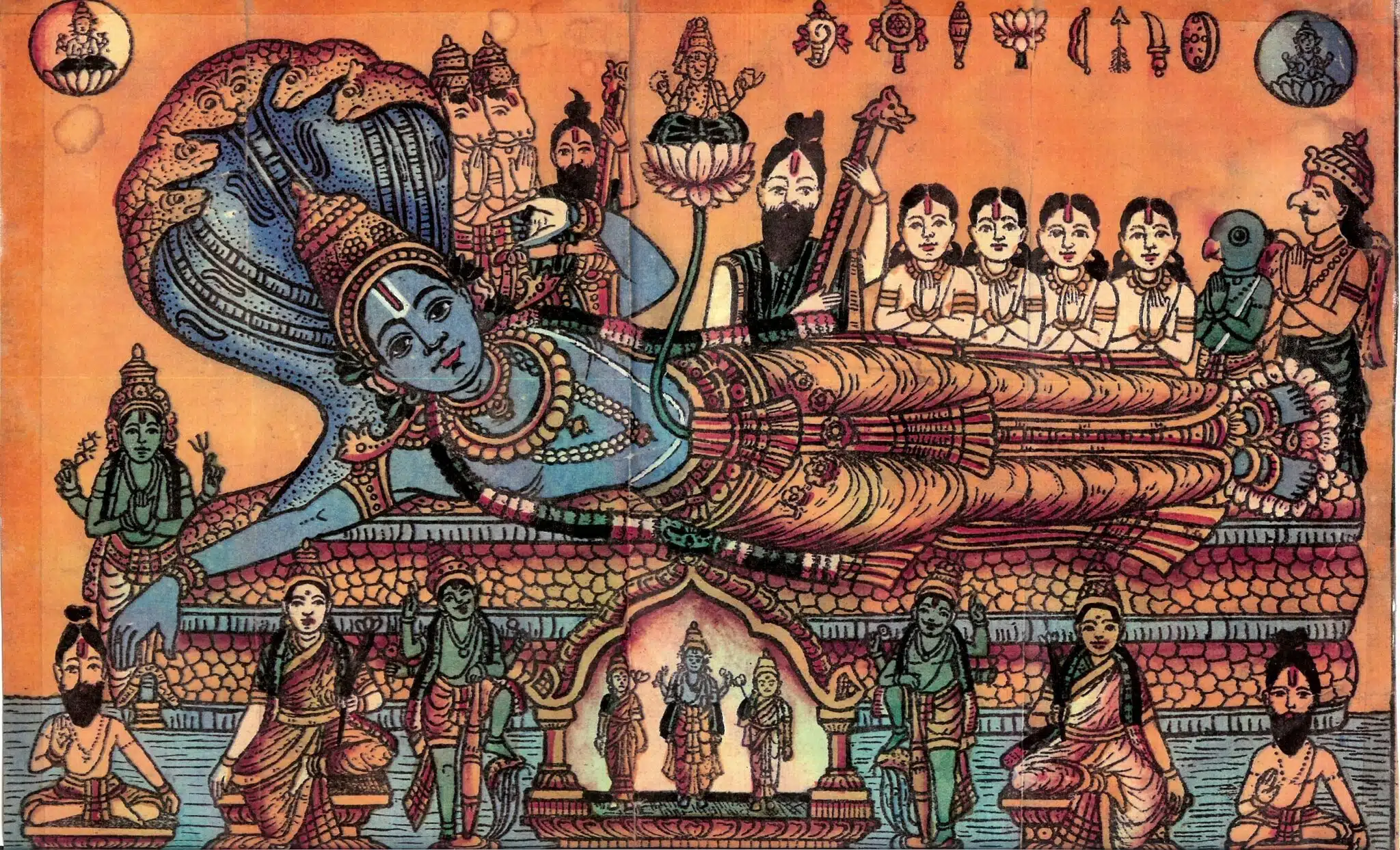
Anantha Padmanabha Vrata is a sacred observance dedicated to Lord Anantha Padmanabha, the infinite form of Lord Vishnu. The vrata has a special place in the Vaishnava tradition and is associated with devotion, faith, protection and the grace of the Supreme Lord.
One of the important traditional elements associated with this vrata is the 14-knot Anantha Dhara, or Anantha Sutra, which is worshipped and worn according to one’s family and sampradaya traditions.
But there is also a beautiful connection between Lord Krishna, Yudhishthira and the Pandavas that makes the story of Anantha Vrata particularly meaningful.
What is Anantha Padmanabha Vrata?
Anantha Padmanabha Vrata is traditionally observed on Bhadrapada Shukla Chaturdashi, popularly known as Ananta Chaturdashi.
The name Anantha means infinite, endless or without beginning and end. In the Vaishnava understanding, Anantha Padmanabha refers to the Supreme Lord in His divine form associated with Ananta.
Devotees observe the vrata with devotion and perform the associated puja according to their family tradition, sampradaya and guidance from their guru or purohita.
In 2026, Ananta Chaturdashi falls on 25 September 2026.
The Connection Between Lord Krishna and the Pandavas
One of the most beautiful aspects of the Anantha Vrata tradition is its connection with Lord Sri Krishna and the Pandavas.
After the Pandavas lost their kingdom and entered their period of exile, they experienced considerable hardship. During this difficult period, Lord Krishna visited the Pandavas.
Yudhishthira, troubled by the difficulties faced by his family, sought Krishna’s guidance.
According to the traditional Ananta Vrata Katha, Lord Krishna advised Yudhishthira to observe the Anantha Vrata, dedicated to Lord Anantha.
Krishna explained the greatness of Anantha and narrated the traditional story associated with the vrata, including the story of Sushila and Sage Kaundinya.
This episode gives the vrata a special connection with the Pandavas and demonstrates the importance of turning towards the Supreme Lord during times of difficulty.
The Story of Sushila and the Anantha Sutra
The traditional Ananta Vrata Katha describes how Sushila, the wife of Sage Kaundinya, came across a group of women performing the Anantha Vrata.
She learned about the greatness of Lord Anantha and participated in the observance.
As part of the vrata, she received the Ananta Sutra, a sacred thread containing fourteen knots.
The Ananta Sutra subsequently became an important element in the traditional observance of the vrata.
The fourteen knots are therefore not merely a decorative feature of the sacred thread. They form part of the traditional symbolism and ritual associated with Anantha Vrata.
Why is the Anantha Dhara made with 14 Knots?
In the story of Sushila, she encounters women performing the Anantha Vrata. They explain the vrata to her, and she performs it and receives the Ananta Sutra—a sacred thread containing fourteen knots.
The thread becomes a significant symbol of the vrata.
Krishna tells Yudhishthira that Ananta is the Infinite Lord, identified with the Supreme Divine, and that worshipping Ananta with faith and devotion can remove difficulties and bring divine grace. A traditional Ananta Vrata text explicitly identifies Ananta Padmanabha with the Supreme Lord and describes the fourteen-knotted thread as part of the observance.
What Happened to the Pandavas?
According to the traditional Ananta Vrata Katha, after receiving Krishna’s guidance, Yudhishthira performed the Anantha Vrata.
The Pandavas eventually overcame their difficulties, achieved victory in the Mahabharata war and regained their kingdom.
The story is therefore remembered as an example of how devotees turn towards the Supreme Lord with faith during difficult circumstances.
It is important, however, to understand the vrata not merely as a means of seeking worldly results. The deeper significance lies in bhakti, surrender, remembrance of the Supreme Lord and adherence to dharma.
Anantha Padmanabha Vrata and Devotion
The word Anantha reminds us of the limitless nature of the Supreme Lord.
Human circumstances may change. Happiness and difficulties may come and go. But the Supreme Lord remains eternal.
Observing a vrata provides an opportunity to discipline the mind, spend time in prayer and remembrance, and strengthen one’s devotion.
For devotees following the Vaishnava tradition, the day can be used for:
- Worship of Sri Anantha Padmanabha
- Recitation of Vishnu-related prayers and stotras
- Listening to or reading the Ananta Vrata Katha
- Performing the prescribed puja according to family tradition
- Offering naivedya and observing the vrata as traditionally followed
- Wearing the Anantha Dhara according to one’s sampradaya
Anantha Dhara – The Traditional 14-Knot Sacred Thread
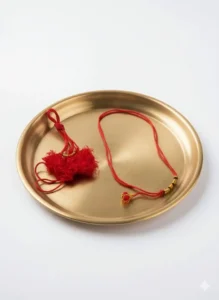
If your family tradition includes the use of an Anantha Dhara, it is advisable to arrange the sacred thread before the vrata day rather than waiting until the last moment.
A traditional 14-knot silk Anantha Dhara is available through our associated spiritual store, Raghavendra Stores.
The set is prepared as a 2-piece set and is suitable for devotees who traditionally use the Anantha Dhara for men and women.
Get the Traditional Anantha Dhara
Buy it from Raghavendra Stores online
For devotees looking for a traditional 14-knot Anantha Padmanabha sacred thread, you can view the product here:
Traditional Padmanabha Swamy Sacred Thread – 2 Set | 14-Knot Silk Anantha Dhara
View the Anantha Dhara at Raghavendra Stores
Please follow your own family tradition or sampradaya procedure regarding the worship and wearing of the Anantha Dhara.
The sacred thread itself is only one part of the observance. The true importance lies in the bhakti and sincerity with which the vrata is performed.
May Sri Anantha Padmanabha Swamy bless all devotees and their families with spiritual strength, peace and devotion.
Sri Anantha Padmanabha Swamy Sharanam!
Sri Krishnaarpanamasthu
About The Author
